
The Arab Urban Development Institute (AUDI) successfully concluded its participation in the Smart City Expo World Congress (SCEWC) 2025, which took place in Barcelona, Spain. The congress is recognized as one of the most influential global platforms dedicated to shaping the future of cities through innovation, technology, and sustainable urban development. It brings together a diverse network of city leaders, policymakers, urban planners, researchers, technology experts, and international organizations from across the world.
AUDI’s participation in SCEWC 2025 reflects its continuous commitment to supporting sustainable urban development, strengthening regional and international cooperation, and promoting constructive dialogue between Arab and European cities. The event provided a valuable opportunity for AUDI to engage with global stakeholders, exchange knowledge, and explore innovative solutions to the complex challenges facing cities today.
Throughout the congress, AUDI actively participated in a wide range of sessions, panel discussions, and thematic workshops that addressed key topics such as smart governance, digital transformation, climate resilience, inclusive urban development, and future-ready cities. These discussions highlighted the growing importance of adopting integrated, people-centered approaches to urban planning that combine technological innovation with social, economic, and environmental considerations.
One of the central themes of the Smart City Expo World Congress 2025 was the role of technology in improving urban life while ensuring sustainability and inclusivity. Sessions explored how digital tools, data-driven decision-making, and emerging technologies such as artificial intelligence and the Internet of Things can enhance urban services, optimize infrastructure, and improve the overall quality of life for citizens. AUDI emphasized the importance of implementing these technologies responsibly, with a strong focus on accessibility, transparency, and citizen engagement.
AUDI’s presence at the congress also served as a platform to highlight its mission and ongoing initiatives aimed at fostering cooperation between cities and institutions across different regions. By engaging with international partners and urban development experts, AUDI reaffirmed its role as a key regional institution dedicated to knowledge exchange, capacity building, and policy dialogue in the field of urban development.
Climate change and urban resilience were among the most prominent topics discussed during the event. With cities increasingly exposed to environmental risks such as extreme weather events, rising temperatures, and resource scarcity, many sessions focused on strategies for climate adaptation and mitigation. AUDI participated in discussions that examined innovative approaches to resilient infrastructure, sustainable energy systems, and nature-based solutions that can help cities respond more effectively to environmental challenges.
The congress also underscored the importance of inclusive urban development, emphasizing that smart city solutions must address the needs of all segments of society. Discussions highlighted the need to reduce social inequalities, enhance access to essential services, and promote social cohesion within urban environments. AUDI strongly supports these principles, recognizing that sustainable urban development cannot be achieved without ensuring equity, participation, and inclusivity.
In addition to attending sessions and discussions, AUDI representatives held several bilateral meetings with city officials, international organizations, and representatives from the private sector. These meetings provided opportunities to explore potential areas of collaboration, exchange experiences, and discuss joint initiatives that could contribute to sustainable urban development. Such interactions are essential for building long-term partnerships and strengthening international networks.
The Smart City Expo World Congress also provided valuable insights into emerging global trends in urban development. Topics such as smart mobility, sustainable transportation systems, urban innovation ecosystems, and digital public services were widely discussed. These themes align closely with AUDI’s strategic priorities and ongoing efforts to support cities in adopting innovative and sustainable solutions tailored to their local contexts.
Another key focus of the congress was the concept of people-first cities. Many sessions emphasized that technology and innovation should ultimately serve people, enhancing well-being, safety, and quality of life. AUDI highlighted the importance of integrating social and cultural dimensions into urban planning processes, ensuring that cities remain inclusive, livable, and responsive to the needs of their communities.
The exchange of best practices and success stories from cities around the world was one of the most valuable aspects of the event. Case studies presented during the congress showcased how cities have successfully implemented smart solutions to address challenges related to mobility, energy efficiency, waste management, and public services. These examples provided practical insights that can inform future initiatives and projects supported by AUDI.
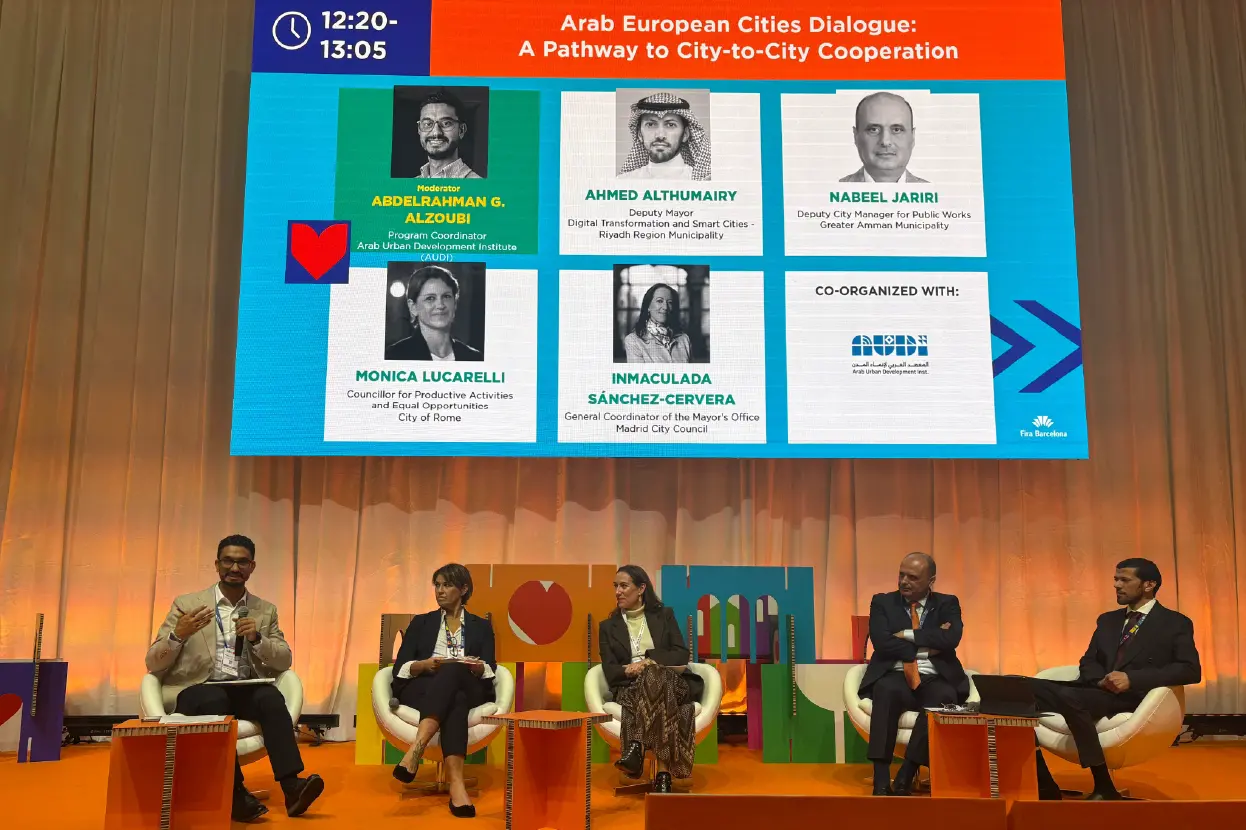
AUDI’s participation in SCEWC 2025 also contributed to strengthening dialogue between Arab and European cities. By engaging in discussions that brought together diverse perspectives and experiences, the congress facilitated mutual learning and cooperation. AUDI continues to play an active role in promoting such dialogue, recognizing its importance in addressing shared urban challenges and fostering sustainable development across regions.